

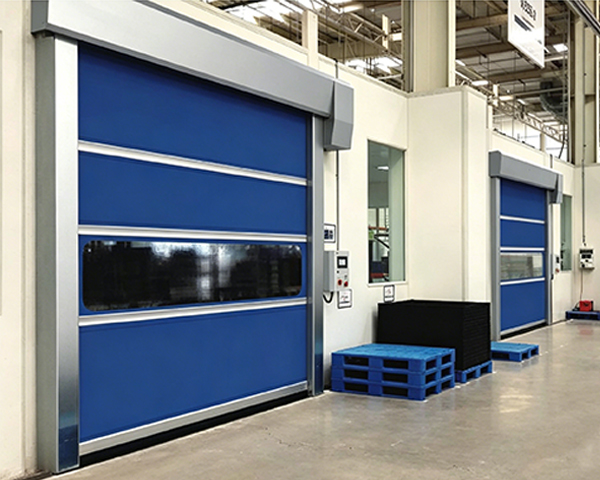
A Fire Resistant Industrial Door is a critical safety barrier designed to protect people, property, and operations in commercial and industrial environments. Built to resist heat, flames, smoke, and structural failure during a fire event, these doors help contain fire spread, preserve evacuation routes, and support compliance with industrial safety standards. In factories, warehouses, logistics centers, power plants, workshops, and other high-risk facilities, fire resistant industrial doors are not just a building component—they are a key part of an effective fire protection strategy.
In modern industrial facilities, the need for dependable fire protection has increased as buildings become larger, machinery becomes more complex, and safety requirements become stricter. A properly specified fire resistant industrial door can help limit damage, reduce downtime, and improve emergency response outcomes. This article provides a complete, SEO-friendly overview of the topic, including definitions, structural features, common classifications, key benefits, technical specifications, standards, applications, and selection considerations. The information below is general industry content and does not include specific company recommendations.
A fire resistant industrial door is an engineered door system designed to withstand fire exposure for a defined period of time while maintaining its structural integrity and limiting the passage of flames, smoke, and hot gases. Unlike standard commercial doors, fire resistant industrial doors are manufactured with specialized materials, tested to recognized fire performance standards, and installed as part of a building’s passive fire protection system.
These doors are commonly installed in industrial facilities where fire risk is elevated due to combustible materials, electrical equipment, heat-generating processes, chemical storage, heavy production lines, or large open spaces. Their purpose is to compartmentalize fire, slow its spread, and protect critical zones such as escape routes, equipment rooms, loading bays, production areas, and storage sections.
Fire resistant industrial doors may be manual or automatic, sliding or hinged, insulated or non-insulated, depending on the application. Some are designed for everyday traffic in busy environments, while others are used primarily as emergency barriers that remain closed under fire conditions.
Industrial safety standards exist to reduce workplace hazards, improve emergency preparedness, and protect lives and assets. Fire resistant industrial doors play a direct role in meeting these objectives by helping facilities control fire risk at the building level.
When a fire starts in an industrial environment, the speed at which it spreads can determine the scale of the damage. A fire resistant industrial door can compartmentalize the incident, delaying flame spread and allowing more time for evacuation, firefighting, and asset protection. This is especially important in large facilities where open floor plans, transport lanes, mezzanines, or interconnected rooms can allow fire to move quickly from one section to another.
From a compliance perspective, fire doors are often required by building codes, fire regulations, and occupational safety rules. They are typically part of a broader fire safety system that may include alarms, sprinklers, smoke control devices, emergency lighting, and fire-rated walls. In many facilities, the correct selection and installation of a fire resistant industrial door can contribute to legal compliance, insurance expectations, and certification requirements.
The main function of a fire resistant industrial door is to provide a controlled barrier during fire exposure. However, its role is broader than simply “blocking fire.” It contributes to overall industrial safety in several important ways:
Fire resistant industrial doors are used across a wide range of industrial and commercial environments. Common applications include:
In each of these settings, the fire door must be selected according to the specific hazards, traffic patterns, and regulatory requirements of the building. The right choice depends on factors such as fire rating, opening size, frequency of use, required insulation, and environmental conditions.
Different industrial environments require different door solutions. The most common types include:
| Door Type | Main Feature | Typical Industrial Use |
|---|---|---|
| Fire Rated Rolling Door | Rolls upward to save space; can close automatically in fire conditions | Warehouses, dock openings, large equipment rooms |
| Fire Rated Sliding Door | Moves horizontally; suitable for wide openings | Factories, storage zones, process areas |
| Fire Rated Hinged Door | Opens like a standard door; strong and simple design | Personnel access points, service rooms |
| Fire Rated Sectional Door | Panel-based vertical operation with insulation options | Industrial loading areas, climate-controlled spaces |
| Fire Rated Shutter Door | Designed for fire compartmentation and frequent closure | Open-plan industrial buildings, storage separation |
| Fire Rated High-Speed Door | Focuses on fast movement, sometimes combined with fire safety systems | Facilities requiring traffic efficiency and safety zoning |
The performance of a fire resistant industrial door depends heavily on the materials used in its structure. Common materials include:
In industrial environments, material selection must balance fire performance, durability, maintenance requirements, corrosion resistance, and operating conditions such as humidity, dust, vibration, or chemical exposure. A properly engineered industrial fire door should remain reliable under demanding conditions while still meeting the required fire rating.
A fire resistant industrial door works by creating a barrier that delays heat transfer and prevents flames and smoke from passing through an opening. The door assembly typically includes the door leaf, frame, hinges or tracks, sealing systems, locking hardware, closing devices, and fire-rated accessories.
When exposed to fire, the door materials and seals are designed to maintain structural integrity for a specified time period. If the door contains intumescent seals, these seals expand when heated, closing gaps around the frame and blocking hot gases or smoke. Some doors are linked to fire alarm systems and close automatically when a fire is detected.
The fire rating of the door indicates how long it can resist fire under test conditions. Common ratings may include 30 minutes, 60 minutes, 90 minutes, or 120 minutes, depending on the product and standard. The actual rating required depends on the building code, fire compartment design, and risk level of the facility.
Fire resistant industrial doors offer both safety and operational benefits. Their value goes far beyond basic fire protection.
| Benefit | Explanation |
|---|---|
| Improved life safety | Helps protect workers by slowing fire spread and preserving evacuation routes. |
| Property protection | Reduces damage to structures, stock, and equipment by containing fire to one zone. |
| Regulatory compliance | Supports adherence to building codes, fire laws, and industrial safety standards. |
| Operational resilience | Helps facilities recover more quickly after an incident by limiting fire impact. |
| Smoke management | Reduces smoke migration, which is critical for safe evacuation and firefighting. |
| Insurance support | May assist in meeting risk mitigation requirements used by insurers. |
| Space efficiency | Available in configurations suitable for large industrial openings and high-traffic areas. |
| Long service life | Built from robust materials suitable for repeated use in demanding environments. |
When evaluating a fire resistant industrial door, several performance factors should be reviewed carefully:
Fire resistant industrial doors are often classified by fire exposure duration. The following table shows common rating levels used in industrial settings:
| Fire Rating | Typical Use Level | General Protection Purpose |
|---|---|---|
| 30 minutes | Lower-risk internal separation | Basic containment for limited fire exposure areas |
| 60 minutes | Common industrial requirement | Moderate fire compartmentation and evacuation support |
| 90 minutes | Higher-risk zones | Enhanced protection for larger or more sensitive areas |
| 120 minutes | Critical facilities and major fire compartments | Extended resistance for high-risk or mission-critical spaces |
It is important to note that fire ratings must be matched to the building design and local regulations. A higher rating is not always necessary, but the selected door must meet the minimum legal and engineering requirements for the specific opening.
Fire resistant industrial doors are often governed by a combination of national, regional, and project-specific standards. Although exact requirements vary by country, the following principles are common across most industrial safety frameworks:
Common international test and classification references may include fire resistance standards, smoke control standards, and building code requirements. In practice, the exact standard used depends on the market and the project specification. Facility managers should verify that the chosen door meets the applicable local and industry standards before installation.
A complete fire resistant industrial door system usually includes the following components:
| Component | Function |
|---|---|
| Door leaf | Main moving panel that provides the fire barrier |
| Frame | Supports the door and anchors it to the wall structure |
| Fire seals | Block smoke, heat, and flame leakage around edges |
| Closing device or motor | Ensures the door closes properly when needed |
| Hinges or guide tracks | Allow controlled movement of the door leaf |
| Locking hardware | Provides secure closure while maintaining fire performance |
| Vision panel | Optional fire-rated glass window for visibility |
| Threshold and perimeter details | Improve sealing and installation stability |
When specifying a fire resistant industrial door, the following technical data should be reviewed carefully:
| Specification | What to Check |
|---|---|
| Fire resistance time | 30, 60, 90, or 120 minutes as required |
| Door opening size | Clear width and height of the opening |
| Operation type | Manual, automatic, sliding, rolling, hinged, or sectional |
| Material thickness | Panel and frame thickness based on design requirement |
| Insulation performance | Heat reduction and thermal barrier capability |
| Smoke control rating | Extent of smoke leakage resistance |
| Surface finish | Painted, powder-coated, galvanized, or corrosion-protected finish |
| Hardware compatibility | Fire-rated hinges, locks, closers, and release systems |
| Installation requirements | Wall compatibility, frame anchoring, and clearance needs |
| Maintenance frequency | Inspection and service interval recommendations |
Industrial doors are exposed to demanding conditions, so environmental suitability is just as important as fire performance. Factors to consider include:
A good fire resistant industrial door should be chosen with both safety and day-to-day operational durability in mind. In many facilities, a door that performs well under fire test conditions but fails under industrial use conditions will not deliver full value. Therefore, practical usability is a major factor in long-term performance.
Even a high-quality fire resistant industrial door can fail if it is installed incorrectly. Proper installation is essential to ensure that the tested fire performance is preserved in the real building environment. Installation typically requires accurate alignment, correct frame anchoring, compatible fire seals, approved hardware, and suitable wall construction.
Installers must ensure that the opening size matches the tested configuration and that no unapproved alterations are made to the door, frame, or accessory set. Gaps, misalignment, or non-compliant modifications can reduce fire resistance and compromise industrial safety standards. For this reason, fire door installation should be handled by trained professionals following the relevant technical documentation.
Routine inspection is essential for maintaining the safety performance of a fire resistant industrial door. Common best practices include:
Maintenance schedules should be based on usage intensity and environmental exposure. High-traffic industrial locations usually require more frequent checks than low-use storage or service rooms. Regular care helps preserve fire performance and extend service life.
It is useful to distinguish between a fire resistant industrial door and a standard industrial door. Although both may look similar in appearance, they serve very different functions.
| Feature | Fire Resistant Industrial Door | Standard Industrial Door |
|---|---|---|
| Fire protection | Designed and tested to resist fire for a set time | Usually not fire-rated |
| Smoke containment | Often includes seals to reduce smoke leakage | Limited or no smoke control |
| Compliance role | Supports fire safety and building code compliance | Mainly used for access, security, or environmental control |
| Construction | Uses fire-resistant materials and tested components | May prioritize cost, speed, or general durability |
| Safety importance | Critical for life safety and compartmentation | Important, but not a fire barrier |
Selecting the right fire resistant industrial door requires a careful balance of safety, function, and compliance. Key questions to ask include:
By answering these questions early in the design process, project teams can avoid mismatches between the door specification and the actual needs of the facility. This is especially important for industrial safety standards where the door is a life safety component, not just a functional access point.
This content supports search visibility for important industry terms related to fire protection and industrial safety. Common keyword themes include:
Using these terms naturally throughout an article, category page, or service page can help search engines understand the page topic and relevance. For best SEO results, the content should remain original, structured, and helpful to users seeking technical information about fire protection solutions for industrial buildings.
The main purpose is to contain fire and smoke within a defined area, protecting occupants, equipment, and adjacent spaces while supporting evacuation and emergency response.
Not always in every opening, but many industrial facilities require them in specific locations based on fire risk, building design, and local codes. Requirements vary by jurisdiction and facility type.
Yes, many models are designed for regular operation in high-traffic industrial environments. However, the door must still maintain its fire performance and closing reliability.
Inspection frequency depends on the environment and local regulations, but routine checks should be performed regularly to confirm proper operation, seal condition, and hardware integrity.
Fire resistance refers to the ability to withstand fire exposure for a period of time, while smoke control focuses on limiting the movement of smoke. Many industrial fire doors are designed to address both.
A Fire Resistant Industrial Door for Industrial Safety Standards is an essential component of modern fire protection planning. It helps contain fire, limit smoke spread, protect escape routes, and support compliance with industrial safety requirements. For factories, warehouses, logistics centers, and other high-risk environments, the right fire door can make a major difference in life safety, operational continuity, and property protection.
To achieve the best results, decision-makers should consider fire rating, door type, material construction, closing reliability, environmental conditions, and maintenance needs. When properly selected, installed, and maintained, a fire resistant industrial door becomes a long-term asset that strengthens industrial safety and supports the overall resilience of the facility.
In summary: fire resistant industrial doors are not simply access products—they are critical safety systems that help buildings meet industrial safety standards while offering practical performance in demanding environments.
Shenyang Manlong Metal Products Co., Ltd.


Copyright © 2026 Shenyang Manlong Metal Products Co., Ltd. Todos los derechos reservados Aplicaciones
Este sitio web utiliza cookies para garantizar que obtenga la mejor experiencia en nuestro sitio web.

 English
 Portugues
 Pусский
 Français
 Deutsch
 العربية
 ไทย
ไทย Türk dili
 Tiếng Việt



 Teléfono
Comentario
(0)